
Adaptive Technology for Coastal Protection
Hydrantula replaces conventional heavy marine construction with a patented modular system: HDPE formwork, GFRP-reinforced concrete and onshore assembly.
Designed for permanent shoreline protection (seawalls, breakwaters, dunes, groynes, etc.) where durability, speed of deployment, and regulatory confidence matter.
Patent-protected TECHNOLOGY
Proprietary modular
marine construction system

Recognised engineering standards
Developed with reference to PUB and BCA requirements (Singapore)

University research collaboration
Advanced coastal protection
research and validation

Key markets
Singapore, China, Japan, Thailand, Indonesia, Malaysia

The Challenge
Rising sea levels and increasingly severe storm surges are placing unprecedented pressure on traditional coastal infrastructure. Conventional defences, often reliant on massive concrete structures and steel reinforcement, face significant limitations in terms of mass, corrosion resistance, and the narrow window for marine construction.

How the Technology Works
Hydrantula's patented modular marine construction platform is engineered for permanent coastal protection, combining advanced materials with onshore efficiency.

01
HDPE Formwork
Utilizing high-density polyethylene (HDPE) pipe formwork, the platform provides a durable, corrosion-resistant shell for onshore assembly and marine placement.

02
Corrosion-Free Core
The GFRP-reinforced concrete core eliminates steel corrosion, ensuring a long-term structural integrity and a design life addressed per project requirements.

03
Modular Assembly
Standardized modular components are assembled onshore, allowing for rapid deployment and precise alignment with minimal marine construction windows.

04
Efficient Design
Efficient by design, the platform reduces the mass of conventional defences and optimizes logistics for a sustainable, lower-carbon shoreline defence.
Our Benefits

Durability
The structural core is reinforced with GFRP, so there is no steel to corrode in seawater, and the permanent HDPE shell protects the core from chloride ingress and abrasion. Performance is being validated through CFD analysis and physical-model testing, and the design is developed to meet recognised engineering standards. Design life is addressed on a project basis, and performance figures are company estimates confirmed for each scheme. Components are also replaceable, which supports long-term maintenance

Mobility
Before the concrete core is cast, the assembled modules are light, which keeps logistics simple. They can be moved and positioned using small utility vessels and buoyant support rather than heavy marine plant, and handled in sections suited to the site. This widens the weather and tidal windows available for placement and lowers the cost and risk of marine operations. Once positioned, the core is cast in place to form the permanent structure

Scalability
The same modular system scales from a single cell to large, continuous shoreline structures, configured to the length, height and exposure each site requires. Because everything is built from standardised fittings, capacity is added by repeating and combining modules rather than redesigning from scratch. Multi-tiered arrangements let the cross-section grow for higher walls or wider footprints without changing the underlying method. A scheme can start small and extend in phases as the programme develops

Simple assembly
Most of the structure is built onshore, where work is faster, safer and easier to control than working over water. The platform assembles from standardised fittings in a repeatable sequence, so quality control and inspection take place on land before placement. This reduces the marine works to positioning and casting, cutting the time, vessels and equipment that a conventional marine build requires. The result is a controlled, repeatable process rather than a complex offshore operation

Reducing carbon footprint through modular assembly and onshore construction.
By completing most of the work onshore, the platform cuts time on the water and the fuel, marine plant and rework that conventional construction relies on. Its efficient, modular design reduces concrete volume compared with equivalent mass structures, and a corrosion-free GFRP core means components last longer and are replaced less often over their service life. Carbon and cost figures are scoped company estimates, confirmed for each project

Design samples


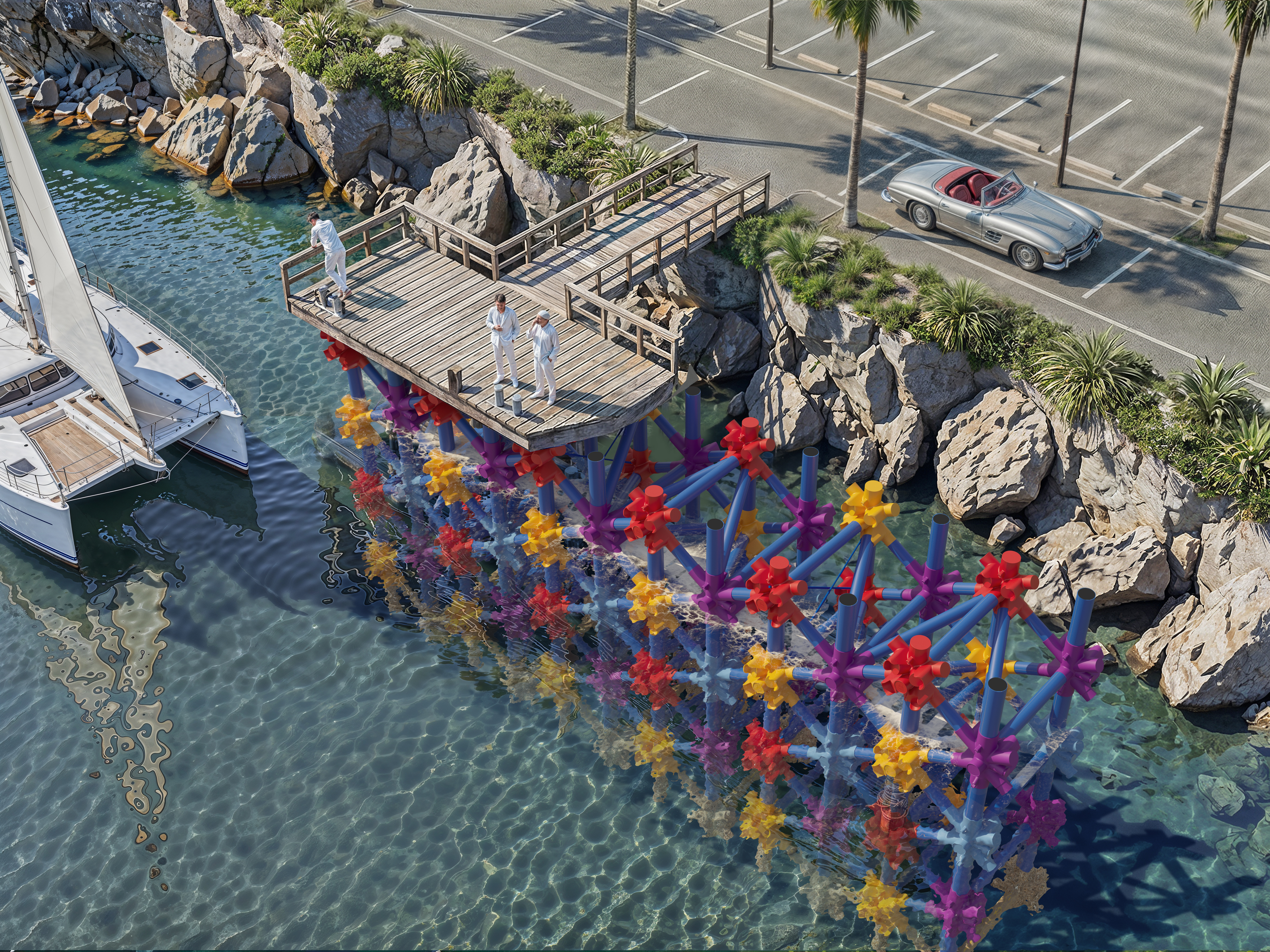
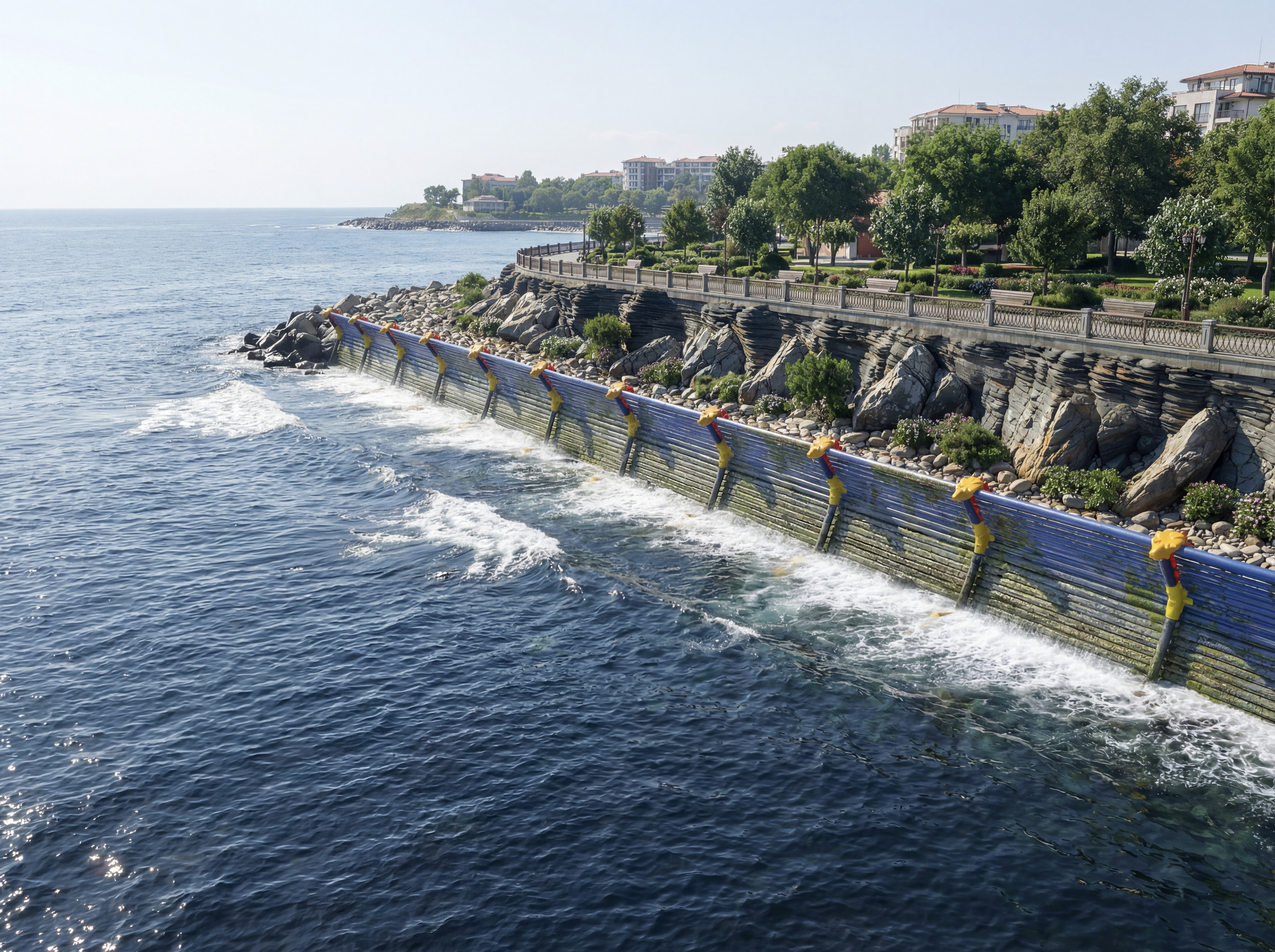
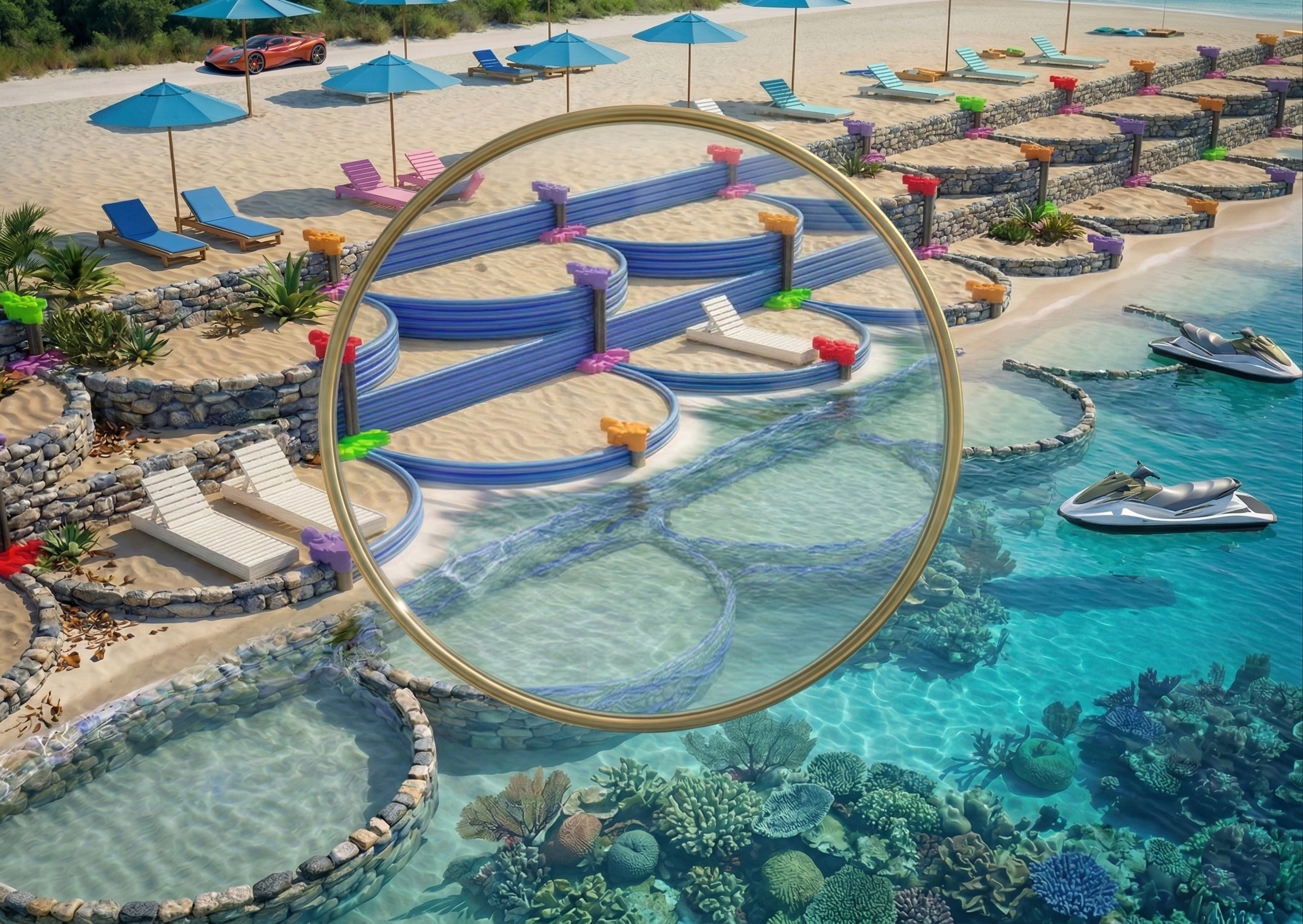
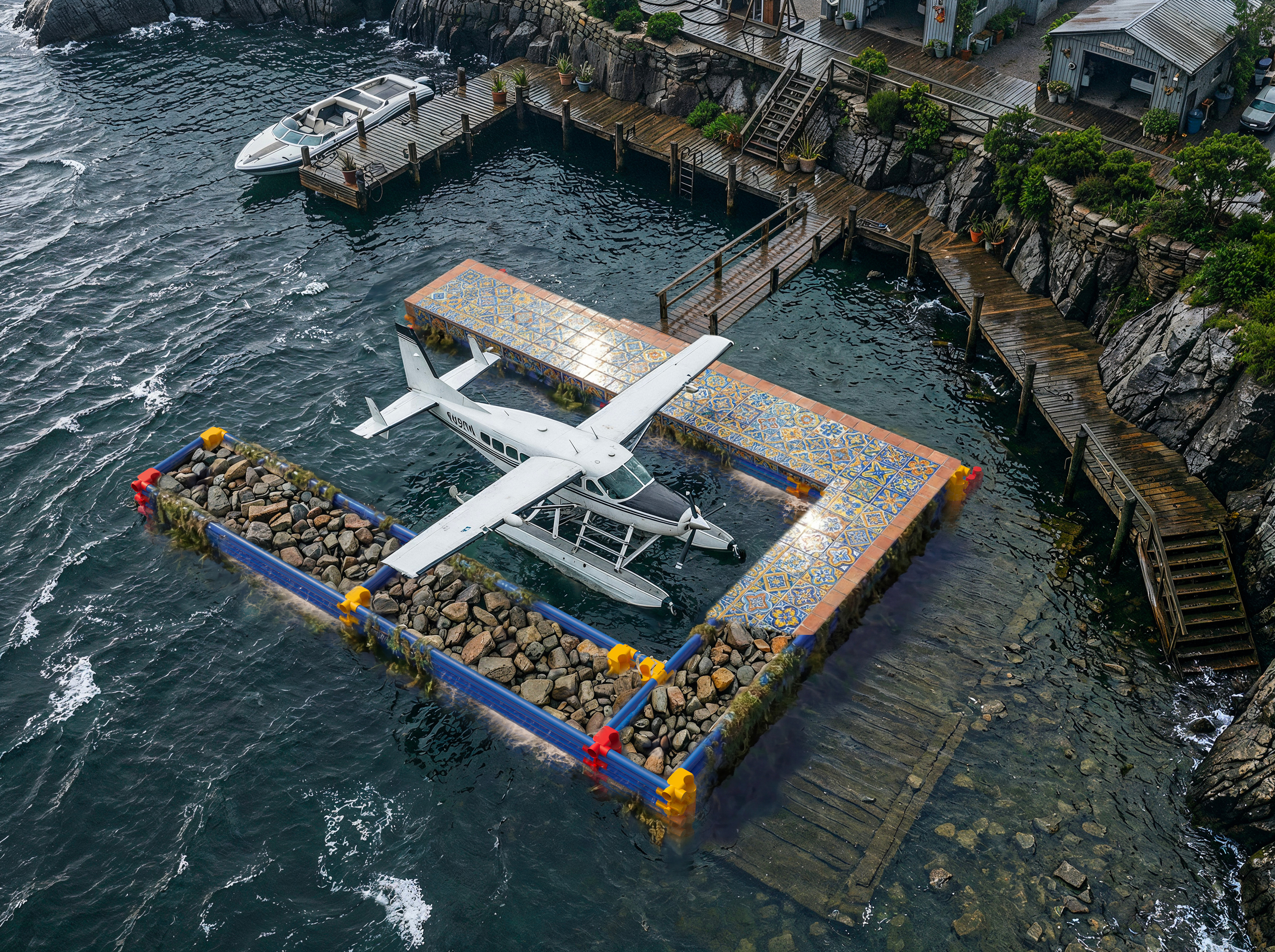
Seawall - Coastal protection
Private Pier
Terraced Dunes
Hydroplane Jetty
Technical Licensing
Access proprietary engineering documentation and licensing frameworks tailored to your project's technical and regulatory requirements.
For Developers
For EPC Contractors
For Government/Regulators
Get information about our product here, Include important features, materials, and other relevant info.
Request a conference call here to discuss important technical licensing issues.
Request details of the technology for compliance with the necessary regulations